The fintechzoom.com SP500 remains the gold standard for measuring the pulse of American equities, and understanding its movements can make the difference between mediocre returns and substantial portfolio growth. FintechZoom has emerged as a valuable resource for investors seeking real-time data, comprehensive analysis, and actionable insights on this benchmark index. Whether you’re a seasoned trader or just starting your investment journey, having access to quality market intelligence is no longer optional—it’s essential for fintechzoom.com SP500 navigating today’s complex financial landscape.
Understanding the S&P 500 Index and Its Market Significance
The S&P 500, or Standard & Poor’s 500, represents approximately 500 of the largest publicly traded companies in the United States, collectively accounting for roughly 80% of the total U.S. stock market capitalization. This index serves as the primary barometer for the overall health of the American economy and includes household names like Apple, Microsoft, Amazon, and Tesla. Unlike the Dow Jones Industrial Average, which only tracks 30 companies, the S&P 500 offers a broader and more representative snapshot of market fintechzoom.com SP500 performance across eleven distinct sectors including technology, healthcare, financials, consumer discretionary, and energy.
What makes the S&P 500 particularly important for investors is its market-cap-weighted methodology, meaning larger companies have greater influence on the index’s movements. This structure reflects real-world market dynamics and provides a more accurate representation of where institutional money flows. The index has historically delivered average annual returns of around 10% over the long term, making it a cornerstone for retirement fintechzoom.com SP500 portfolios, mutual funds, and exchange-traded funds worldwide.
How FintechZoom Delivers Comprehensive SP500 Coverage
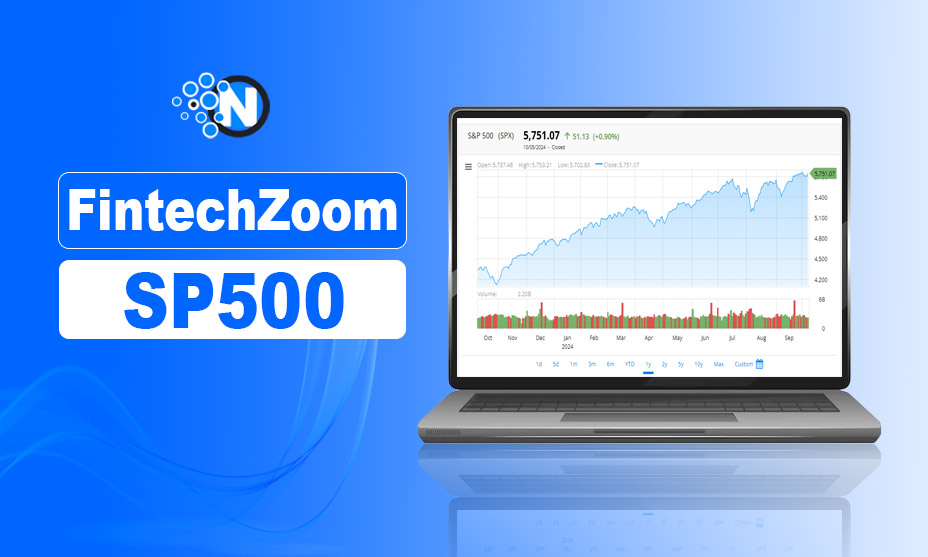
FintechZoom has positioned itself as a go-to platform for investors seeking detailed S&P 500 analysis by combining real-time market data with expert commentary and educational resources. The platform aggregates information from multiple reliable sources, presenting it in an accessible format that caters to both novice investors and fintechzoom.com SP500 experienced market participants. Users can track live index movements, review historical performance charts, and access breaking news that might impact market sentiment—all from a single dashboard.
What sets FintechZoom apart is its commitment to contextualizing raw data with meaningful analysis. Rather than simply displaying numbers, the platform helps users understand the “why” behind market movements, examining factors like Federal Reserve policy decisions, corporate earnings reports, geopolitical events, and economic indicators. This holistic approach empowers investors to make informed decisions fintechzoom.com SP500 based on comprehensive market understanding rather than reactive emotional responses to price fluctuations.
Current Market Trends Shaping the S&P 500 in 2025
The S&P 500 landscape in 2025 is being shaped by several dominant themes that investors need to monitor closely. Artificial intelligence continues to drive significant market momentum, with tech giants investing billions into AI infrastructure and applications, creating ripple effects across the index. The semiconductor sector has fintechzoom.com SP500 experienced particular volatility as companies race to meet surging demand for AI chips while navigating supply chain complexities and geopolitical tensions surrounding chip manufacturing.
Interest rate dynamics remain a critical factor influencing S&P 500 performance, as the Federal Reserve balances inflation concerns against economic growth objectives. After aggressive rate hikes in previous years, current monetary policy decisions significantly impact borrowing costs, corporate profitability, and investor appetite for risk fintechzoom.com SP500 assets versus bonds. Additionally, the energy transition is reshaping traditional sector weightings, with renewable energy companies gaining ground while conventional energy stocks face long-term headwinds, fundamentally altering the composition and behavior of the index over time.
Key Sectors Driving S&P 500 Performance
The technology sector continues to fintechzoom.com SP500 performance, representing approximately 28-30% of the index’s total weight and serving as the primary driver of both gains and volatility. The “Magnificent Seven” stocks—Apple, Microsoft, Alphabet, Amazon, Meta, Nvidia, and Tesla—command outsized influence over daily index movements due to their massive market capitalizations. When these tech giants report strong earnings or announce innovative products, the entire index typically benefits; conversely, any fintechzoom.com SP500 disappointments can drag down overall market performance regardless of how other sectors are performing.
Healthcare and financials serve as the next most influential sectors, providing ballast during tech sector turbulence while offering their own growth narratives. Healthcare benefits from demographic tailwinds including aging populations and increasing demand for innovative treatments, while financial stocks respond directly to interest rate environments and economic growth prospects. Consumer discretionary companies reflect consumer spending confidence, while industrials and materials sectors serve as economic bellwethers, often leading the market during recovery phases and lagging during slowdowns.
Expert Analysis: What the Charts Are Telling Us
Technical analysis of the S&P 500 reveals important support and resistance levels that professional traders monitor for potential entry and exit points. Historical chart patterns show that the index tends to respect certain psychological price levels and moving averages, particularly the 50-day and 200-day moving averages that indicate fintechzoom.com SP500 medium-term and long-term trends respectively. When the index trades above both of these moving averages with healthy volume, it typically signals bullish market conditions; conversely, breaks below these levels often precede more significant corrections.
Market breadth indicators—which measure how many stocks are participating in market moves—provide crucial context that the headline index number alone cannot reveal. A healthy bull market requires broad participation across sectors and market caps, not just a handful of mega-cap stocks driving gains. Experts closely watch metrics like the advance-decline line, new highs versus new lows, and sector rotation patterns to gauge the fintechzoom.com SP500 underlying strength or weakness of market movements and identify potential turning points before they become obvious.
Economic Indicators That Impact S&P 500 Movements
The S&P 500 responds directly to key economic reports that provide insight into the health and direction of the U.S. economy. Monthly employment reports, particularly the nonfarm payrolls number, can trigger significant intraday volatility as investors reassess growth prospects and Federal Reserve policy expectations. Strong job fintechzoom.com SP500 growth typically supports corporate earnings and consumer spending, benefiting the index, while weak employment data raises recession concerns and can pressure stock valuations across the board.
Inflation metrics including the Consumer Price Index and Personal Consumption Expenditures index heavily influence market sentiment because they directly impact Federal Reserve policy decisions. Higher-than-expected inflation readings often lead to sell-offs as investors price in more aggressive interest rate hikes, while cooling inflation supports market rallies by suggesting the Fed might pause or reverse tightening measures. GDP growth rates, manufacturing indices, consumer confidence surveys, and corporate earnings fintechzoom.com SP500 reports all contribute to the complex mosaic of data that drives S&P 500 performance on both short-term and long-term timeframes.
Smart Investment Strategies for S&P 500 Exposure
For most investors, low-cost index funds and exchange-traded funds tracking the S&P 500 offer the most efficient way to gain diversified exposure to America’s leading companies. These passive investment vehicles charge minimal fees—often below 0.1% annually—while delivering returns that closely mirror the index performance. This approach aligns with decades of research showing that the majority of actively managed funds fail to outperform the S&P 500 over extended periods, making passive indexing an intelligent default fintechzoom.com SP500 strategy for long-term wealth building.
Dollar-cost averaging—investing fixed amounts at regular intervals regardless of market conditions—helps investors avoid the psychological pitfalls of trying to time the market. This disciplined approach automatically buys more shares when prices are low and fewer when prices are high, smoothing out entry points over time. For more sophisticated investors, tactical overweighting or underweighting specific sectors based on economic cycles can potentially enhance returns, though this requires deeper market knowledge and more active management than pure indexing strategies.
Risk Management When Investing in the S&P 500
Despite its strong long-term track record, the S&P 500 experiences significant volatility and periodic drawdowns that test investor resolve. Historical data shows that the index typically experiences at least one correction of 10% or more each year, and bear markets of 20% declines or worse occur roughly every five to seven years. Understanding this volatility is essential for setting appropriate expectations and maintaining discipline fintechzoom.com SP500 during inevitable market downturns rather than panic-selling at the worst possible times.
Diversification beyond just U.S. large-cap stocks can help mitigate concentration risk inherent in S&P 500 investing. While the index itself offers diversification across 500 companies, it remains heavily weighted toward U.S.-based businesses and lacks significant exposure to small-cap growth, international markets, and alternative asset classes. A well-constructed portfolio typically includes bonds for stability, international equities for geographic diversification, and potentially real estate or commodities for inflation protection, fintechzoom.com SP500 using the S&P 500 as a core holding rather than the entire portfolio.
Valuation Metrics: Is the S&P 500 Overvalued or Undervalued?
The price-to-earnings ratio remains the most widely referenced valuation metric for assessing whether the S&P 500 trades at attractive or expensive levels compared to historical norms. As of recent market conditions, the forward P/E ratio—which uses projected future earnings rather than trailing results—provides insight into what investors are willing to pay for expected corporate profitability. When this ratio significantly exceeds fintechzoom.com SP500 historical averages of around 15-17 times earnings, it suggests elevated valuations that may limit future upside or increase downside risk during corrections.
However, valuation analysis requires context beyond simple ratio comparisons. Interest rate environments fundamentally affect what constitutes “fair value” for equities—lower rates justify higher P/E multiples because future earnings are worth more in present value terms, while higher rates compress valuations. Additionally, the S&P 500’s increasing concentration in high-growth technology companies with different economic characteristics than traditional industrial businesses means historical valuation benchmarks may not apply directly to today’s market composition. Investors should consider multiple metrics including price-to-sales, price-to-book, and the Shiller CAPE ratio alongside qualitative factors when assessing market valuations.
The Role of Technology in Modern S&P 500 Investing
Digital platforms like FintechZoom have democratized access to sophisticated market analysis that was once available only to institutional investors and wealthy individuals. Real-time data feeds, advanced charting tools, and algorithmic screening capabilities enable retail investors to conduct research and execute strategies with professional-grade resources. Mobile applications provide constant market connectivity, allowing fintechzoom.com SP500 investors to monitor positions, receive breaking news alerts, and adjust portfolios from anywhere in the world.
Artificial intelligence and machine learning are increasingly being integrated into investment platforms, offering pattern recognition, sentiment analysis from news and social media, and automated portfolio rebalancing based on predefined parameters. While these technological tools enhance decision-making capabilities, they cannot eliminate the fundamental uncertainties inherent in market investing. The most successful investors combine technological advantages with disciplined strategy, emotional control, and long-term perspective rather than relying exclusively on algorithms or chasing short-term trading opportunities.
Looking Ahead: S&P 500 Outlook and Key Factors to Watch
The S&P 500’s future trajectory depends on a complex interplay of factors including corporate earnings growth, monetary policy evolution, geopolitical stability, and technological innovation. Corporate profit margins—currently near historical highs—face pressure from wage inflation, supply chain costs, and potential regulatory changes, making the sustainability of earnings growth a critical question for maintaining current fintechzoom.com SP500 valuations. Any significant margin compression could trigger meaningful market corrections even if revenue growth remains healthy.
Geopolitical considerations including U.S.-China relations, regional conflicts, and trade policy shifts introduce unpredictable variables that can suddenly impact market sentiment and specific sectors. Meanwhile, the ongoing energy transition, healthcare innovation, and the buildout of AI infrastructure represent multi-year investment themes that will likely create both winners and losers within the index. Successful investors will stay informed through reliable sources like FintechZoom, maintain diversified portfolios, and focus on long-term wealth creation rather than attempting to perfectly predict short-term market movements that even professional investors consistently fail to time accurately.